In the world of woodworking, long bed wood lathes are indispensable tools, offering the versatility to create a wide range of woodturning projects, from intricate spindles to large bowls. As a long – standing supplier of long bed wood lathes, I often encounter customers who are torn between choosing a manual and an automatic long bed wood lathe. In this blog, I’ll delve into the key differences between these two types of lathes to help you make an informed decision. Long Bed Wood Lathe
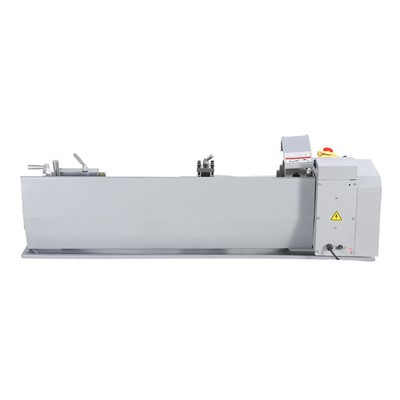
1. Operation Mechanism
Manual Long Bed Wood Lathe
A manual long bed wood lathe is the traditional workhorse of the woodturning workshop. The operator is in complete control of every aspect of the turning process. To start, the wood blank is securely mounted between the headstock and the tailstock. The operator then adjusts the tool rest to the appropriate height and position. When it comes to cutting, the operator uses hand – held cutting tools to shape the wood. They must carefully manipulate the tools, controlling the depth of cut, the angle of the tool, and the feed rate.
For example, if you’re creating a tapered spindle, you’ll have to constantly adjust the position of the tool rest and the angle of your cutting tool as you move along the length of the wood. This hands – on approach requires a high level of skill and experience. The operator needs to have a good understanding of wood grain, cutting techniques, and how to avoid common problems such as tear – outs and chatter.
Automatic Long Bed Wood Lathe
On the contrary, an automatic long bed wood lathe is designed to automate many of the processes involved in woodturning. Once the wood blank is loaded and the necessary parameters are set, the lathe can perform a series of operations with minimal human intervention. These parameters can include the diameter of the finished piece, the length, the shape (such as a cylinder, cone, or custom profile), and the cutting speed.
The lathe uses a programmable logic controller (PLC) or a computer numerical control (CNC) system to execute the programmed commands. For instance, if you’ve programmed the lathe to create a series of identical table legs, it will automatically move the cutting tools, adjust the depth of cut, and rotate the wood at the appropriate speed to produce each leg with consistent dimensions. This automation reduces the need for constant manual adjustment, making it suitable for high – volume production.
2. Precision and Consistency
Manual Long Bed Wood Lathe
Achieving high precision on a manual long bed wood lathe is highly dependent on the skill and experience of the operator. Even the most experienced woodturners may find it challenging to produce multiple identical pieces with exact precision. Small variations in the operator’s hand movements, tool angles, or the pressure applied to the cutting tool can result in differences in the final dimensions of the turned wood.
For example, if you’re making a set of chair spindles, each spindle may have slight variations in diameter or taper. However, manual lathes do offer a level of flexibility that can be beneficial for creating unique, one – of – a – kind pieces. The operator can make on – the – fly adjustments based on the characteristics of the wood, such as knots or irregular grain patterns.
Automatic Long Bed Wood Lathe
Automatic long bed wood lathes excel in precision and consistency. Since the operations are controlled by a computer system, the lathe can repeat the same cutting operations with a high degree of accuracy. This is particularly important for mass production where all the pieces need to be identical.
For example, in a furniture manufacturing plant that produces thousands of table legs, an automatic lathe can ensure that each leg has the exact same diameter, length, and taper. The precision of automatic lathes also extends to complex shapes and profiles. They can reproduce intricate designs with a level of detail that would be extremely difficult to achieve manually.
3. Learning Curve and Skill Requirements
Manual Long Bed Wood Lathe
Learning to operate a manual long bed wood lathe is a gradual process that requires patience and practice. Newcomers to woodturning need to learn the basics of tool handling, such as how to hold the cutting tools correctly, how to sharpen them, and how to apply the right amount of pressure. They also need to understand the properties of different types of wood and how they respond to cutting.
It can take months or even years to develop the skills necessary to produce high – quality work on a manual lathe. However, the learning process can be very rewarding, as it allows woodworkers to develop a deep understanding of the craft and a personal touch in their work.
Automatic Long Bed Wood Lathe
While automatic long bed wood lathes reduce the physical demands of woodturning, they introduce a new set of learning challenges. Operators need to learn how to program the lathe, which involves understanding the software interface, inputting the correct dimensions and cutting parameters, and troubleshooting any programming errors.
However, once the initial programming is mastered, the operation of the lathe becomes relatively straightforward. This makes automatic lathes a good option for those who want to quickly start producing consistent, high – quality pieces without spending years honing their manual woodturning skills.
4. Production Speed
Manual Long Bed Wood Lathe
The production speed of a manual long bed wood lathe is limited by the operator’s skill and physical capabilities. Each cut requires careful attention and adjustment, which can slow down the overall process. For simple projects, such as turning a small wooden pen, a skilled operator may be able to complete the task relatively quickly. However, for more complex projects, such as a large, intricately carved wooden bowl, the process can take hours or even days.
Manual lathes are better suited for small – scale production or custom work where the focus is on quality and craftsmanship rather than speed.
Automatic Long Bed Wood Lathe
Automatic long bed wood lathes are designed for high – speed production. Once the lathe is programmed, it can work continuously, making cuts at a consistent rate. This significantly reduces the production time per piece, especially for large – volume orders.
For example, a furniture factory can produce hundreds of chair legs in a day using an automatic lathe, whereas the same number of legs would take a team of manual woodturners much longer to produce.
5. Cost
Manual Long Bed Wood Lathe
Manual long bed wood lathes are generally more affordable than their automatic counterparts. The initial purchase price is lower because they do not require the advanced control systems and software that automatic lathes need. Additionally, the maintenance costs of manual lathes are usually lower. The cutting tools are relatively inexpensive to replace, and the mechanical components are simpler to repair.
This makes manual lathes a popular choice for hobbyists and small – scale woodworking shops with limited budgets.
Automatic Long Bed Wood Lathe
Automatic long bed wood lathes come with a higher price tag. The cost of the advanced control systems, such as CNC or PLC, and the software development adds to the overall expense. Moreover, the maintenance of these systems requires specialized knowledge, which may involve hiring trained technicians, increasing the long – term maintenance costs.
However, for large – scale production facilities where the increased productivity and precision can lead to significant cost savings in the long run, the investment in an automatic lathe may be justified.
Conclusion

In conclusion, the choice between a manual and an automatic long bed wood lathe depends on several factors, including your skill level, production needs, budget, and the type of projects you plan to undertake. If you’re a hobbyist or a small – scale woodworker who values craftsmanship and enjoys the hands – on aspect of woodturning, a manual lathe may be the best choice for you. On the other hand, if you’re running a large – scale production facility and need to produce consistent, high – volume pieces quickly, an automatic long bed wood lathe is likely the better option.
Magnetic Drill Press As a supplier of long bed wood lathes, I’m here to help you make the right decision. Whether you have questions about the technical specifications, need advice on which type of lathe is suitable for your business, or are ready to discuss a purchase, I encourage you to reach out. Our team of experts can provide detailed information and support to ensure that you get the most out of your woodturning investment.
References
- "Woodturning Basics" by John Jordan
- "CNC Woodworking Handbook" by Mark Spagnuolo
- Industry reports on woodworking machinery trends
YS Machine Tools Co., Ltd.
We’re well-known as one of the leading long bed wood lathe suppliers in China, featured by quality products and good service. Please rest assured to buy customized long bed wood lathe at competitive price from our factory. Contact us for more details.
Address: 300 Sandusky st, Ohio, 43611, USA
E-mail: yishoumachinetools@gmail.com
WebSite: https://www.ysmachinetool.com/
