Alright, folks! As a supplier in the field of Atomic Physics Instruments, I often get asked, "What is the resolution of atomic physics instruments?" Well, let’s dive right into it and break it down in plain English. Atomic Physics Instruments
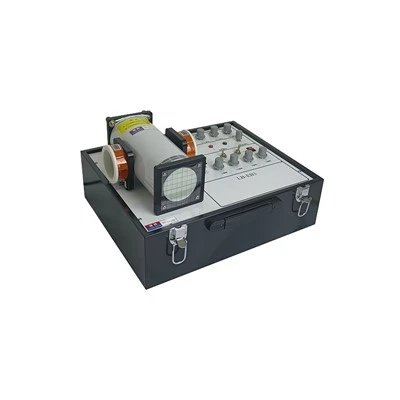
First off, resolution in the context of atomic physics instruments is super important. It’s kind of like the sharpness of a camera. You know how a high – resolution camera can take clear, detailed pictures, showing all the tiny details? In atomic physics, resolution works in a similar way. It determines how well an instrument can distinguish between two closely – spaced atomic or molecular features, like energy levels or spectral lines.
Let’s talk about some common atomic physics instruments and how resolution matters for each of them.
Spectrometers
Spectrometers are like detectives in the world of atoms. They analyze the light emitted or absorbed by atoms and molecules. The resolution of a spectrometer tells us how well it can separate different wavelengths of light.
For example, in atomic emission spectroscopy, atoms are excited, and they emit light at specific wavelengths. These wavelengths are like fingerprints that tell us what elements are present in a sample. A spectrometer with high resolution can clearly distinguish between the emission lines of different elements, even if those lines are very close together. This is crucial because in real – world samples, you often have a mix of multiple elements. If the resolution is low, the emission lines might blend together, and you won’t be able to accurately identify all the elements in the sample.
The resolution of a spectrometer is usually defined by the ratio of the wavelength (λ) to the smallest resolvable wavelength difference (Δλ). We call this the spectral resolution (R), and it’s calculated as R = λ/Δλ. A higher value of R means better resolution. For instance, if a spectrometer has a spectral resolution of 10,000, it can distinguish between two wavelengths that are only 1/10,000 of the central wavelength apart.
Mass Spectrometers
Mass spectrometers are another key instrument in atomic physics. They’re used to determine the mass – to – charge ratio (m/z) of ions. The resolution of a mass spectrometer is all about how well it can separate ions with different m/z values.
Imagine you’re trying to distinguish between two types of ions that have very similar masses. A high – resolution mass spectrometer can tell them apart accurately. In biological samples, for example, you might have different biomolecules with similar molecular weights. By using a mass spectrometer with good resolution, you can analyze the composition of these complex samples and identify individual biomolecules.
The resolution of a mass spectrometer can be defined in different ways, but a common one is the full – width at half – maximum (FWHM). It measures the width of a peak in the mass spectrum at half of its maximum height. A narrower FWHM means a higher resolution, as the instrument can better separate peaks corresponding to different ions.
Atomic Force Microscopes (AFMs)
AFMs are used to image surfaces at the atomic and molecular scale. The resolution here refers to the smallest distance between two points on the surface that can be distinguished.
An AFM works by using a tiny probe tip that scans the surface. As the tip moves across the surface, it experiences forces due to the interaction with atoms. By measuring these forces, we can create an image of the surface topography. A high – resolution AFM can show individual atoms on a surface.
The resolution of an AFM depends on several factors, such as the shape and size of the probe tip. A sharper and smaller tip generally allows for better resolution. Also, the stability of the instrument and the quality of the feedback control system play important roles. If the instrument is noisy or unstable, it can smear the image and reduce the resolution.
Factors Affecting Resolution
Now that we know what resolution means for different atomic physics instruments, let’s talk about the factors that can affect it.
Instrument Design
The design of an instrument has a huge impact on its resolution. In the case of spectrometers, the design of the dispersive element (like a prism or a diffraction grating) is crucial. A well – designed diffraction grating with a large number of lines per unit length can provide higher resolution.
For mass spectrometers, the type of mass analyzer (e.g., time – of – flight, quadrupole, or magnetic sector) and its design parameters determine the resolution. Each type of mass analyzer has its own advantages and limitations in terms of resolution.
Signal – to – Noise Ratio (SNR)
The SNR is an important factor in determining resolution. Noise can come from various sources, such as electrical noise in detectors or fluctuations in the source of excitation. A high SNR means that the signal from the atoms or molecules of interest is much stronger than the background noise.
When the SNR is low, the noise can mask small features in the data, making it difficult to distinguish between closely – spaced signals. So, improving the SNR can effectively improve the resolution of an instrument. This can be done by using better detectors, reducing external interference, or averaging multiple measurements.
Sample Characteristics
The nature of the sample itself can also affect the resolution. In spectroscopy, for example, if the sample is not homogeneous, it can lead to broadening of the spectral lines, which reduces the effective resolution of the instrument.
In mass spectrometry, the presence of contaminants or matrix effects in the sample can interfere with the accurate measurement of m/z values and reduce the resolution. For AFMs, the roughness of the surface and the presence of adsorbed molecules can limit the resolution.
Why High Resolution Matters
You might be wondering, why do we even need high – resolution atomic physics instruments? Well, there are many reasons.
In scientific research, high – resolution instruments are essential for making new discoveries. For example, in astrophysics, high – resolution spectrometers can help us analyze the composition of stars and galaxies. By accurately measuring the spectral lines of elements in distant objects, we can learn about their chemical evolution and the physical processes taking place in them.
In the pharmaceutical industry, high – resolution mass spectrometers are used to identify and analyze new drug compounds. They can help determine the purity of drugs and detect trace impurities, which is crucial for ensuring the safety and effectiveness of medications.
In materials science, AFMs with high resolution are used to study the surface properties of materials at the atomic scale. This knowledge can be used to develop new materials with improved properties, such as stronger metals or more efficient semiconductors.
Our Offerings as a Supplier
As a supplier of Atomic Physics Instruments, we understand the importance of resolution. We offer a wide range of instruments with high – end resolution capabilities.
Our spectrometers are equipped with state – of – the – art diffraction gratings and sensitive detectors, which ensure excellent spectral resolution. Whether you’re working in a research laboratory or an industrial setting, our spectrometers can provide accurate and detailed analysis of your samples.
Our mass spectrometers use advanced mass analyzers and signal processing techniques to achieve high mass resolution. We also offer custom – built solutions to meet the specific needs of our customers.
And our AFMs are designed with the latest technology to provide high – resolution imaging of surfaces. We provide comprehensive training and support to help you make the most of these instruments.
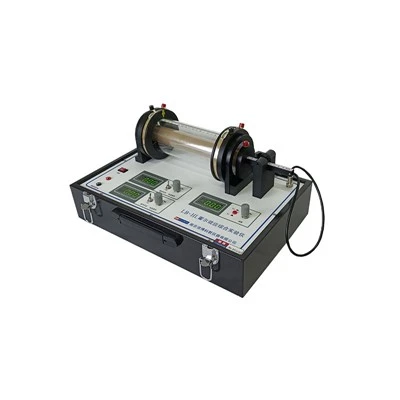
If you’re looking for atomic physics instruments with top – notch resolution, we’re here to help. Whether you’re a researcher looking to push the boundaries of science or an industry professional in need of reliable analytical tools, we have the right solution for you.
Mechanical instruments So, if you’re interested in learning more about our products or have any questions regarding the resolution of atomic physics instruments, don’t hesitate to reach out. We’d love to have a chat with you and help you find the perfect instrument for your needs. Just start a conversation with us, and we’ll be happy to guide you through the purchasing process. Let’s work together to take your atomic physics research or analysis to the next level.
References
- "Atomic Physics" by C. J. Foot
- "Introduction to Mass Spectrometry: Principles and Applications" by R. M. Smith
- "Scanning Probe Microscopy: From Principles to Nanoscale Applications" by P. A. Serena
Nanjing Longbow Scientific&Educational Instrument Co., Ltd.
As one of the most professional amo physics instruments manufacturers and suppliers in China, we’re featured by quality products and good service. Please rest assured to buy customized amo physics instruments from our factory. If you have any enquiry about pricelist, please feel free to email us.
Address: Room D, 22th floor, No.305, North Jiangdong Road, Nanjing,Jiangsu Province, China
E-mail: 79425380@qq.com
WebSite: https://www.lb-physics.com/
