Hey there! I’m a supplier of rubber cables. One of the most common questions I get from customers is how to check the insulation integrity of rubber cables. It’s a crucial aspect because the insulation is what keeps the electrical current flowing safely and prevents any potential hazards. So, in this blog, I’ll share some practical ways to check the insulation integrity of rubber cables. Rubber Cable

Why Checking Insulation Integrity Matters
Before we dive into the methods, let’s talk about why it’s so important to check the insulation integrity of rubber cables. Rubber cables are used in a wide range of applications, from industrial settings to household appliances. Over time, the insulation can degrade due to various factors such as heat, moisture, chemical exposure, and mechanical stress.
If the insulation is damaged, it can lead to electrical leakage, short circuits, and even fires. That’s why regular inspections are a must to ensure the safety and reliability of your electrical systems.
Visual Inspection
The first and easiest way to check the insulation integrity of a rubber cable is through a visual inspection. It’s a simple yet effective method that can help you identify any obvious signs of damage.
- Check for Cracks and Abrasions: Look closely at the entire length of the cable. Cracks and abrasions in the rubber insulation are clear signs of damage. These can be caused by physical impact, sharp objects, or even normal wear and tear. If you notice any cracks, no matter how small, it’s a red flag.
- Look for Swelling or Discoloration: Swelling or discoloration of the rubber insulation can indicate that the cable has been exposed to excessive heat or chemicals. For example, if the cable is installed in an area with high temperatures or near chemicals, the insulation may start to break down. Swelling can also be a sign of moisture ingress, which can further damage the insulation.
- Inspect the Cable Ends: Pay special attention to the cable ends, where the insulation is more likely to be damaged during installation or connection. Make sure the insulation is intact and there are no signs of fraying or peeling.
Insulation Resistance Testing
Visual inspection is a good start, but it may not detect all types of insulation damage. That’s where insulation resistance testing comes in handy. This test measures the resistance of the insulation to the flow of electrical current. A high insulation resistance value indicates good insulation integrity, while a low value may suggest damage.
- Using a Megohmmeter: A megohmmeter, also known as a megger, is a common tool for insulation resistance testing. To perform the test, you’ll need to disconnect the cable from the power source and make sure it’s completely de-energized. Then, connect the megger to the cable conductors according to the manufacturer’s instructions.
- Test Procedure: Set the megger to the appropriate voltage range and start the test. The megger will apply a test voltage to the cable insulation and measure the resulting current. It will then calculate the insulation resistance value. Take multiple readings at different points along the cable to get a more accurate picture of the insulation condition.
- Interpreting the Results: The acceptable insulation resistance value depends on the type of cable, its application, and the industry standards. In general, a higher resistance value is better. If the measured value is significantly lower than the expected value, it may indicate insulation damage and further investigation is needed.
Dielectric Absorption Ratio (DAR) Testing
In addition to insulation resistance testing, the Dielectric Absorption Ratio (DAR) test can provide more detailed information about the insulation condition of rubber cables.
- How It Works: The DAR test measures the ratio of the insulation resistance after 60 seconds to the insulation resistance after 30 seconds. When an insulation material is subjected to a test voltage, it takes some time for the charges to stabilize. The DAR test takes advantage of this phenomenon to evaluate the quality of the insulation.
- Test Procedure: Similar to the insulation resistance test, you’ll need to use a megohmmeter. First, measure the insulation resistance after 30 seconds of applying the test voltage. Then, measure the insulation resistance again after 60 seconds. Calculate the DAR by dividing the 60 – second resistance value by the 30 – second resistance value.
- Interpretation: A DAR value of 1.6 or higher is generally considered good, indicating that the insulation is in good condition. A lower DAR value may suggest water absorption, contamination, or other forms of insulation degradation.
Partial Discharge Testing
Partial discharge testing is a more advanced method for detecting insulation defects in rubber cables. It can identify small defects in the insulation that may not be detected by other methods.
- What is Partial Discharge? Partial discharge occurs when the electrical stress in a small area of the insulation exceeds the breakdown voltage of that area, causing a localized discharge. These discharges can gradually damage the insulation over time.
- Testing Equipment: Specialized partial discharge testing equipment is required for this test. It typically consists of a detector, a coupling capacitor, and a display unit.
- Test Procedure: The test is usually carried out under normal operating voltage or a slightly elevated voltage. The equipment detects the partial discharge signals and analyzes their characteristics, such as magnitude, frequency, and location.
- Interpretation: The presence of significant partial discharge activity may indicate insulation defects. The severity of the defect can be determined based on the magnitude and frequency of the partial discharges.
Frequency – Domain Dielectric Spectroscopy (FDS)
Frequency – Domain Dielectric Spectroscopy (FDS) is another advanced technique for assessing the insulation integrity of rubber cables.
- How FDS Works: FDS measures the dielectric properties of the insulation material over a wide range of frequencies. By analyzing the dielectric response, it can provide information about the moisture content, aging, and other degradation mechanisms in the insulation.
- Test Equipment: FDS testing requires specialized equipment that can apply a variable – frequency voltage to the cable insulation and measure the resulting current.
- Test Procedure: The test is performed by applying a sinusoidal voltage with a range of frequencies to the cable insulation. The equipment measures the complex dielectric permittivity of the insulation at each frequency.
- Interpretation: The results are typically presented in a graph, showing the variation of dielectric properties with frequency. Deviations from the normal behavior can indicate insulation degradation.
Periodic Maintenance and Testing Schedule
To ensure the long – term reliability of your rubber cables, it’s important to establish a periodic maintenance and testing schedule.
- Initial Testing: When you first install a rubber cable, it’s a good idea to perform a comprehensive insulation integrity test. This will establish a baseline for future comparisons.
- Regular Inspections: Conduct visual inspections at regular intervals, depending on the application and the environment. For example, in a harsh industrial environment, you may need to inspect the cables more frequently.
- Scheduled Testing: Perform insulation resistance testing, DAR testing, or other advanced tests on a regular basis. The frequency of testing can be determined based on the cable’s age, usage, and historical performance.
Conclusion
Checking the insulation integrity of rubber cables is essential for ensuring the safety and reliability of your electrical systems. By using a combination of visual inspection, insulation resistance testing, DAR testing, partial discharge testing, and FDS, you can effectively detect and diagnose insulation problems.
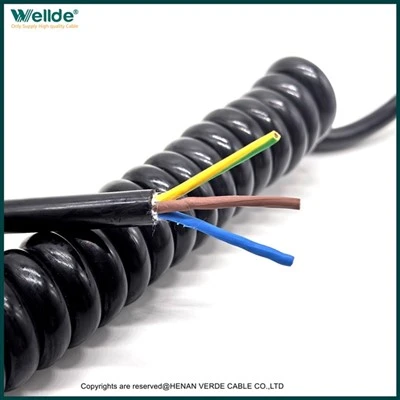
As a rubber cable supplier, I’m committed to providing high – quality cables and helping my customers maintain them properly. If you have any questions about rubber cables or need advice on insulation testing, don’t hesitate to reach out to me. We can discuss your specific needs and find the best solutions for your applications.
High Voltage Cable Let’s work together to keep your electrical systems running smoothly and safely. If you’re in the market for rubber cables or need further information on cable maintenance, feel free to contact me for a purchase discussion. I’m here to support you every step of the way.
References
- Electrical Insulation Testing Manual, Electro – Test Equipment Manufacturers Association
- Handbook of Electric Power Calculations, Third Edition, by Irwin H. Chang
Henan Verde Cable Co., Ltd.
Henan Verde Cable Co., Ltd. is well-known as one of the leading rubber cable manufacturers and suppliers in China. Please feel free to wholesale high quality rubber cable in stock here from our factory. All products are with high quality and competitive price. Contact us for price list.
Address: Rm 1508, Kaixuanmen Building B#, No.238 Tongbai South Road, Zhengzhou City, Henan Province, China. 450006
E-mail: linda@welldecable.com
WebSite: https://www.welldecable.com/
