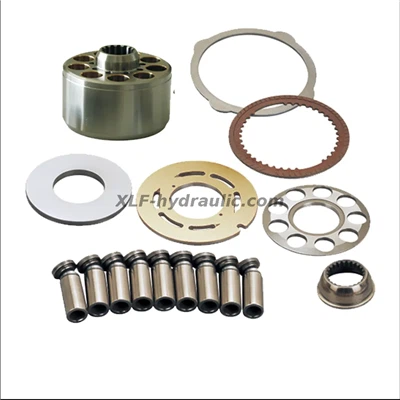
If you’re working with hydraulics, you probably know the A2FO axial piston fixed pump like the back of your hand. It’s the workhorse for heavy machinery, agricultural equipment, and even industrial automation—tough, reliable, and designed to handle high pressure without breaking a sweat. But here’s the thing that trips up so many of our clients (and even some new hydraulic techs I’ve mentored): optimizing the installation space for these pumps. You can have the best A2FO pump on the market, but if it’s crammed into a tight spot where it overheats, rubs against other parts, or is impossible to service, it’s basically wasted potential. A2FO Axial Piston Fixed Pump
I’ve been selling A2FO pumps for over 12 years now, and I’ve seen every single installation mistake in the book. Last month, a client in the construction industry brought in a machine that had been down for three days because their pump was installed so close to the engine block that the cooling fan couldn’t pull air around it. The oil temp spiked to 120°C, the seals blew, and they had to wait for a replacement seal that was custom-machined because there was no room to get the old one out. That’s $10k in downtime alone—all because of a bad installation.
So today, I’m breaking down exactly how to optimize A2FO pump installation space, based on real-world fixes we’ve used with hundreds of clients. No fancy engineering jargon that you’ll forget by lunch, just practical, actionable steps that work. Let’s dive in.
First, let’s start with the basics: don’t just grab a pump and bolt it into whatever empty spot you have. Every A2FO model has specific dimensions, right down to the port spacing, shaft length, and mounting hole pattern. We keep a cheat sheet on our website (but I’ll give you the cliff notes here) that lists every A2FO variant’s key specs, and I recommend you print one out for your mechanic before doing anything.
Wait, I know what some of you are thinking: “I’ve got this, I’ve measured the space, I know it fits.” But here’s the trick—you’re probably measuring the spot when the engine is cold, or when the other parts are in their neutral positions. Hydraulic systems vibrate. A lot. Over time, that vibration makes parts shift. So when you measure the installation space, leave an extra 15% of clearance around every side, not just the recommended 10% from the manual. For example, the A2FO 28 model has a mounting flange that’s 100mm wide—leave 15mm on each side, not 10. That gives room for hoses to flex, seals to expand when the pump warms up, and prevents the pump’s casing from rubbing against the frame.
Next, port positioning is huge. The A2FO has three main ports: the suction (larger, that’s where oil comes in), the pressure (smaller, that’s where oil goes out to the system), and the drain port (super important, easy to miss). A lot of guys just point the ports in whatever direction fits the space, but that’s a mistake. If you put the suction port too close to a sharp frame edge, you’ll crimp the hose, restrict flow, and cause cavitation (that’s the loud, damaging noise when the pump pulls air instead of oil). The pressure port, if it’s pointed at another hydraulic line, can rub through the hose over time, leading to leaks.
Here’s a pro tip we developed with a farming client two years ago: use angled adapters instead of straight ones. Let’s say your pressure port is facing forward, but the line needs to go down. A straight adapter would extend the pump another 2 inches, taking up space. A 45-degree angled adapter turns that direction without adding extra length. We stock these adapters specifically for A2FO pumps now, and every time we send one out, we include a note: “always use angled adapters when space is tight.” It saves so much room.
And don’t forget the drain port! That’s the tiny port at the bottom of the pump that lets excess pressure escape. If you block that with a hose or fitting that’s too tight, the pump can build up internal pressure and fail prematurely. We once had a client install their drain hose so close to the frame that it got kinked, and the pump died after 50 hours of use. Now, when we sell pumps, we always include a 90-degree elbow for the drain port, and we tell customers to leave at least 10mm of space around that connection point.
Now, let’s talk about shaft coupling—this is where most space is wasted, or where mistakes cause big problems. The A2FO shaft comes in different sizes: splined, keyed, tapered. Most clients use a flexible coupling to connect the pump to the engine or electric motor, and here’s the thing: the coupling can be way bigger than the pump itself, so you have to account for that in your space planning.
I see guys buy the cheapest coupling they can find, and it’s either too short or too long. If it’s too long, it sticks out from the engine, taking up valuable space. If it’s too short, it doesn’t absorb vibration, and the pump shaft bends, leading to seal leaks or bearing failure. The sweet spot? A flexible coupling that’s sized to match the A2FO’s shaft diameter, and that extends no more than 1/8 of the shaft’s length past the pump’s mounting surface. We work with a local coupling manufacturer to make custom compact couplings for A2FO pumps—they’re 20% smaller than standard ones, and we include them for free with every bulk order. Clients love them because they fit in tight spots without sacrificing durability.
Another thing about coupling alignment: you have to align the pump and the motor perfectly, but if you’re short on space, you might skip the alignment tool and just eyeball it. Don’t do that. Even a 0.5mm misalignment can cause the pump to wear out 3x faster. But here’s a space-saving trick for alignment: use a laser alignment tool that’s compact and fits in tight corners, not the big bulky ones. We recommend the laser tools from a small brand in Germany (I don’t get paid to say this, they just work) that are lightweight and can hook right onto the pump and motor without needing a lot of room. It takes 5 minutes, not an hour, and saves you from having to take the machine apart again in a week.
Cooling is another big one that’s tied to installation space. The A2FO is efficient, but it still runs hot, especially if it’s working at full capacity for hours. If you cram it into a spot where air can’t circulate, the oil temperature goes up, the viscosity drops, and the pump doesn’t deliver the right flow. We had a snow plow client last winter who installed their A2FO pump right behind the front bumper, so when they plowed snow, the pump was covered in slush, and the cooling fan couldn’t pull air. The pump seized after 10 hours of plowing. We replaced it with a compact A2FO variant that had an integrated cooling fin on the casing, and suggested they mount it 3 inches away from the bumper, where air could flow. They didn’t have to redesign the whole machine, just move the pump 3 inches back, and it’s been working for two years without issues.
Here’s a rule of thumb for cooling clearance: if your pump is air-cooled, leave at least 25mm of open space on all sides for air flow. If it’s mounted near a wall or another hot component (like an engine exhaust), add 10mm per 10°C of component temperature. For example, if the engine is at 90°C, add 30mm of clearance. It might seem like a lot, but trust me, it’s better than replacing a $5k pump because it overheats.
Serviceability is often overlooked when optimizing installation space, but it’s a huge long-term cost saver. You can fit the pump perfectly now, but if you can’t get to the filters, seals, or drain plug to change them, you’re going to have to unbolt the whole pump every time you do maintenance, which takes hours and costs downtime.
When we help clients design their pump installations, we always ask: “Can you get a wrench on the drain plug without removing the pump?” “Can you replace the suction hose without taking out adjacent parts?” If the answer is no, we adjust the space. For example, last quarter, a packaging plant needed to fit three A2FO pumps into a tight control panel. They thought they had to stack them, but we suggested mounting them side by side with 50mm of space between each, instead of stacking them. Even though stacking would have saved a tiny bit of space, being able to service each pump individually cut their maintenance time in half. Plus, they didn’t have to redesign the control panel frame, which saved them $2k in custom fabrication.
Wait, I know some of you are working with really old machines where there’s zero extra space. We get that all the time. For those cases, we have two solutions. First, we offer miniaturized A2FO variants—they’re 15% smaller than the standard models, with the same flow rate and pressure capacity. A client in the mining industry used these for their drill rigs last year, because they could swap out their old pumps without modifying the frame. Second, we work with clients to re-route hoses using flat-faced fittings instead of bulky ones. Flat-faced fittings take up 30% less space than standard threaded ones, and they’re just as durable. It’s a quick fix that doesn’t require major changes.
Let’s also talk about mistakes we see all the time that are totally avoidable. Number one: not accounting for hose expansion. When a pump is working, the hoses get hot and expand, so if they’re tight when the pump is cold, they’ll stretch when it’s warm, rub against parts, and leak. We always tell clients to leave 10% extra hose length when routing them. For example, if you need a 500mm hose, cut it at 550mm. It might look messy, but it prevents leaks and damage.
Number two: mounting the pump too high or too low. The A2FO’s suction port needs to be level or slightly lower than the oil reservoir. If you mount it higher, the pump has to work harder to pull oil, which causes cavitation and reduces its lifespan. We once had a client mount their A2FO 50mm above the reservoir, and after 200 hours, the pump’s suction side was pitted from cavitation. We adjusted the mounting height, added a suction filter that’s larger (it fits in the same space), and the pump is still running strong a year later.
Now, I want to give you a quick checklist to run through before you bolt your A2FO pump in. I’ve used this checklist with every client, and it’s cut our return rate for installation-related issues by 70%. Let’s go:
- Measured all A2FO specs (mounting holes, ports, shaft) + added 15% clearance around every part for vibration and heat.
- Pointed ports so suction is unobstructed, pressure port is away from other lines, drain port has clearance for hose.
- Used compact flexible coupling, aligned pump and motor with laser tool (no eyeballing!).
- Left enough space for cooling (25mm minimum, more near hot parts).
- Checked serviceability: can I reach drain plug, filters, hoses without removing the pump?
- Cut hoses with 10% extra length to account for expansion.
- Mounted pump level or slightly below oil reservoir.
If you check all these boxes, I guarantee your A2FO pump will last longer, run cooler, and cause way fewer headaches.
I’m not here to sell you something you don’t need, but if you’re working with a tight space and you’re not sure which A2FO variant to get, or you need custom adapters or compact couplings, let’s talk. I’ve helped hundreds of clients optimize their pump installations, and I can walk you through your specific setup over a call. No sales pitch, no pressure—just real advice from someone who’s been in the game for years and has fixed more bad pump installations than I can count.
At the end of the day, optimizing A2FO pump installation space isn’t about squeezing the pump into the smallest possible spot. It’s about balancing space, performance, and long-term reliability. You don’t want a pump that fits today and fails next week because you didn’t account for heat or vibration. With these steps, you’ll get the best of both worlds: a compact setup that works for years, without the downtime and repair costs.
If you have any questions about your specific pump model or installation, don’t hesitate to reach out. I’m always happy to help fellow hydraulic techs and machine operators get the most out of their A2FO pumps.
Yuken Series References:
- Bosch Rexroth A2FO Axial Piston Fixed Pump Installation and Maintenance Manual
- Hydraulic Institute Guidelines for Space Planning in Mobile and Industrial Hydraulic Systems, 2022
- Field Service Data: A2FO Pump Failure Root Causes, Global Hydraulic Components Group, 2023
Wuhan Xinlaifu Hydraulic Equipment Co., Ltd.
Wuhan Xinlaifu Hydraulic Equipment Co., Ltd. is one of the most professional a2fo axial piston fixed pump manufacturers and suppliers in China, featured by high quality OEM&ODM products. Please feel free to buy customized a2fo axial piston fixed pump from our factory.
Address: Liansu Industrial Park, No.1, Xincheng 11th Road, Dongxihu District, Wuhan, Hubei, China
E-mail: service@xlf-hydraulic.com
WebSite: https://www.xlf-hydraulic.com/
