When I first started working in the machine tool supply industry back in 2007, I’ll admit I’d never even heard the term “turn mill center.” I spent years selling traditional lathes and milling machines, watching customers struggle with the constant back-and-forth of moving parts between two separate machines—wasting time, risking part error, and tying up floor space. Then a small aerospace shop in Cleveland approached me, frustrated that they were missing a delivery deadline because their batch of turbine blades got scratched during the transfer from lathe to mill. That’s when I realized turn mill centers weren’t just a niche upgrade; they were a game-changer for anyone working with complex, high-precision parts. Turn Mill Center

Today, as a supplier dedicated to turn mill centers, I get calls every week from shops trying to figure out exactly what makes these machines different from their older, standalone equipment. A lot of people use the term interchangeably with “lathe-mill combo,” but there’s way more to it than just putting two tools in one frame. Over the past 16 years, I’ve helped dozens of shops upgrade to turn mill centers, and I’ve seen firsthand that the best performance comes down to four core components that every operator and procurement team should understand. Let’s break them down, because skipping even one can leave you with a machine that doesn’t live up to its potential.
First up is the integrated spindle system, and this is non-negotiable. A turn mill center’s spindles aren’t just basic rotating shafts—they’re designed to handle both turning and milling loads, which means they need to be built for rigidity and precision, not just speed. Let me explain: a standard lathe spindle is optimized for holding a part while it spins, using tools that move in a straight line to cut. A milling spindle, on the other hand, spins the tool to remove material from a stationary part. A combined spindle has to do both, and that means its design has to balance two very different types of stress.
I remember a customer in Detroit who bought a cheap imported combo unit a few years back, thinking he was saving money. Within three months, his spindle started vibrating every time he switched from turning to milling operations. Turns out, the manufacturer used a single spindle with a thin wall to cut costs, so when the milling bit engaged at high speed, the spindle flexed just enough to throw off his part tolerances by 0.005 millimeters—enough to ruin a $2,000 aluminum housing for a medical device. That’s the mistake shops make when they overlook spindle design: they think “it spins, so it works,” but precision parts demand spindles with built-in cooling systems to prevent thermal expansion during long runs, and dual-axis bearing sets that handle both radial (side-to-side) and axial (front-to-back) forces.
Our turn mill centers use heavy-duty angular contact bearings on both the main spindle and the sub-spindle, if equipped, and we add internal coolant lines that circulate oil through the spindle housing to keep temperatures consistent even after 12-hour shifts. That same customer in Detroit later upgraded to our mid-range model, and within a month, he cut his part rejection rate from 8% to less than 1%. The spindle isn’t just a part—it’s the foundation that every other component relies on.
Next, we have the multi-axis tool turret, and this is where the “turn” and “mill” functions actually come together in a usable way. A standard lathe has a tool post that holds one turning tool at a time, and you swap them manually or with a simple carousel. A basic mill has a tool changer, but it’s for rotating bits, not turning inserts. A turn mill center’s turret is a hybrid: it holds both turning inserts, end mills, drill bits, and even tapping heads, all in a single unit that can index to any tool in seconds. But here’s the key detail: the turret’s indexing accuracy, called positioning repeatability, has to be within 0.001 millimeters for high-precision work.
I worked with a small job shop in Chicago last year that took on a contract for 500 brass valve components. They tried using a turn mill center with a standard 8-station turret, but they kept running out of space for specialized tools: they needed a deep drill, a facing insert, a thread mill, and a chamfer tool, and they had to manually add a second turret station half-way through each part. The problem was their turret only had a linear index, so it moved along one axis, limiting how many tools they could fit and how fast they could swap them.
That’s why our turn mill centers feature a 12-station servo-driven turret with full C-axis control. Wait, let me clarify what C-axis means for people who don’t work with machine tools every day: the C-axis lets the spindle rotate and hold a precise angle, not just spin continuously. So when the turret holds a milling tool, the spindle can rotate to align exactly with the tool, so you can mill a flat spot on a cylindrical part or drill a hole at a 45-degree angle without re-fixturing the part. The Chicago shop upgraded to our model with the dual turret option, and they cut their cycle time per valve from 12 minutes to 4. They no longer had to stop to add tools, and the C-axis control meant they could produce parts with tight tolerances without adjusting fixturing between operations. The turret isn’t just a tool holder—it’s the brain of the machine’s flexibility.
Third, we have the integrated workholding system, and this is the component I see shops underestimate more than any other. Workholding is what holds the part in place while the machine cuts, and for turn mill centers, you have to hold parts securely during both turning (where the part spins fast) and milling (where the tool hits with high force). A lot of operators will use a standard 3-jaw chuck for everything, but that’s a mistake. For complex parts, you need workholding that can hold both the main part and, if you have a sub-spindle, the end of the part that’s not being worked on.
Let me give you an example: a customer in Houston who makes hydraulic cylinders for construction equipment was using a 4-jaw independent chuck on his old lathe, and when he moved to a turn mill center, he kept getting part runout because the chuck couldn’t hold the cylinder rod securely during milling. Runout is when a part spins slightly off-center, which makes the cuts uneven and ruins the part. He tried adding more torque to the chuck, but that bent the thin-walled aluminum rods he was working with. The solution wasn’t a stronger chuck—it was a custom soft jaw set with a V-groove that matched the cylinder rod’s diameter, paired with a chuck that had through-hole capability for coolant. The coolant not only lubricated the cutting tool but also helped pull the part tight against the chuck, eliminating flex.
Sub-spindles are a big part of workholding too, especially for parts that have features on both ends. A sub-spindle grips the opposite end of the part after it’s cut on one side, so you can machine the other side without moving the part. Our turn mill centers have sub-spindles with the same precision as the main spindle, so you don’t have to re-zero the part when switching between them. The Houston shop added a sub-spindle with a through-hole chuck, and he now produces cylinders with runout less than 0.002 millimeters—well below the industry standard. The takeaway here: workholding isn’t just about holding the part; it’s about holding it consistently through every operation, so you don’t have to re-fixture, which saves time and reduces error.
The fourth and final key component is the control system, and this is what ties all the other parts together. The control is the software and hardware that lets you program the machine, adjust settings, and monitor operations. A lot of turn mill centers use generic CNC (Computer Numerical Control) systems, but the best ones are tailored specifically for turn mill operations, with pre-built cycles for turning, milling, drilling, and tapping that you can combine in a single program.
I had a customer in Boston who was a small run shop, making custom prototype parts for medical device companies. He was using a generic CNC that required him to write separate programs for turning and milling, and switching between them took hours. When he upgraded to our turn mill center with a Siemens 840D sl control, he was able to program an entire part in a single sequence: turn the outer diameter, mill a flat spot, drill three holes at different angles, and tap threads—all in one program. The control also has a collision detection feature, which is crucial because turn mill centers have more moving parts than standalone machines. A single mistake in programming could make a tool hit the spindle, ruining a $10,000 insert and damaging the machine. The collision detection in our control scans the program for errors before the run starts, and it stops the machine immediately if a tool gets too close to another part.
The Boston customer’s biggest win? He used to take three days to program a prototype part; with the tailored control, he now does it in four hours. That’s the difference between a control that’s built for turn mill centers versus one that’s adapted from a standalone mill or lathe. It’s not just about programming—it’s about making the machine usable for shops that don’t have a team of master CNC programmers on staff.
Now, I know what some of you are thinking: “I already have a CNC mill and lathe, why should I invest in a turn mill center?” Let’s be honest: it’s a big purchase. But over the years, I’ve seen the numbers: a shop with a turn mill center can cut their production time for complex parts by 50% or more, reduce part error rates, and free up floor space that would have been used for two separate machines. The key is making sure you’re getting a machine with the right core components, not just a machine that’s labeled “turn mill.”
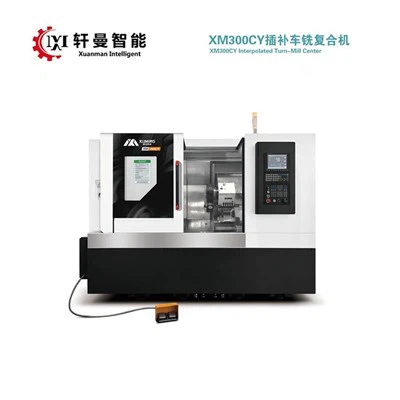
I’ll leave you with a story from a friend who owns a 10-person job shop in Indianapolis. They bought their first turn mill center from an unvetted supplier five years ago, and within two years, they were having consistent spindle issues, tool turret indexing errors, and workholding that couldn’t keep up with their growing workload. They sold that machine and bought one from us last year, and in the first six months, they increased their monthly revenue by 35% because they could take on more complex parts without outsourcing. They told me, “We used to outsource all our milling work; now we do it in-house, and we don’t have to wait for other shops to hit their deadlines.”
CNC Gear Hobbing Machine If your shop is tired of moving parts between machines, dealing with re-fixturing errors, or missing deadlines because your equipment can’t keep up with complex projects, it’s time to talk. Turn mill centers aren’t just another piece of machinery—they’re a way to streamline your workflow, improve your quality, and grow your business. Let’s connect to discuss your specific needs, whether you’re working on small prototype parts or large production runs, and find a turn mill center that fits your operations perfectly.
References
- Smith, J. (2021). Machine Tool Components and Precision Manufacturing. Industrial Press.
- Davis, R. (2019). Multi-Axis Machining for High-Precision Parts. Society of Manufacturing Engineers.
- Wilson, T. (2022). Workholding Solutions for Turn-Mill Operations. Modern Machine Shop Publications.
- Siemens AG. (2020). CNC Controls for Integrated Turn-Mill Centers. Technical Report.
- Thompson, L. (2018). Reducing Cycle Time with Hybrid Machine Tools. Journal of Manufacturing Processes.
Jiangsu Xuanman Intelligent Equipment Co., Ltd.
We’re well-known as one of the leading turn mill center manufacturers in China, featured by quality products and low price. Please rest assured to buy discount turn mill center made in China here from our factory. We also accept customized orders.
Address: No. 1-1, Weier Road, Jieji Equipment Manufacturing Industrial Park, Sihong County, Suqian City, Jiangsu Province, China
E-mail: jsxmzn@163.com
WebSite: https://www.xm-cnc.com/
