If you’ve ever been deep in the semiconductor manufacturing space, chances are you’ve heard the back-and-forth between Wafer Graphite Carriers and plastic wafer carriers. As someone who’s been supplying graphite carriers for years, I get it—most folks new to the game just want to know which one’s actually worth their time, money, and risk. Let’s break this down like we’re chatting over coffee, no stuffy jargon, no sales fluff. Wafer Graphite Carrier
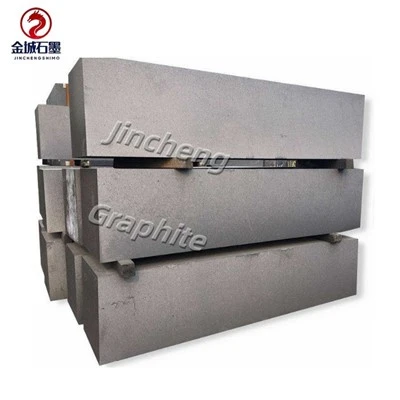
First off, let’s get one thing straight: both carriers do the same basic job. They hold your tiny, expensive silicon wafers (or compound semiconductors, if you’re working with GaN or SiC) steady through every step of the process—think deposition, etching, annealing, you name it. The catch is what they’re made of, and that material changes everything about how they perform, especially when temperatures climb.
Let’s start with the big one: heat. Plastic wafer carriers, unless they’re super expensive engineering-grade stuff like PEEK, melt. Like, actually turn into goop if you look at them wrong in a high-temp process. I’ve seen it happen firsthand—client sends a batch of plastic carriers for a 200°C anneal, comes back with half of them warped so bad the wafers were cracked down the middle. Graphite carriers? They’re built to handle way higher temps—we’re talking up to 2000°C, no melt, no warp, no weird deformation. The only time graphite even softens is way beyond what any standard semiconductor process uses. That’s a game-changer for anyone doing high-heat steps.
Wait, but not all graphite is the same, right? Our carriers use high-density isostatic graphite, which is pressed super evenly so it has zero weak spots. That means no warping even when you heat it up and cool it down fast—thermal cycling is huge in fabs. Plastic? Most standard plastics have a super low glass transition temperature (Tg), like 100-150°C. Once you hit that, they start to flex. So if you’re running a process where temperature swings a lot, plastic carriers will wear out way faster. I have a client who switched from plastic to graphite two years ago—they went through 50 plastic carriers a month, now they’re on 10 graphite carriers that still work like new. That math adds up fast.
Next up: surface quality. Wafers are delicate, even a tiny scratch can ruin a whole batch. Graphite, if it’s treated right, has a super smooth surface—we coat ours with a layer of silicon carbide (SiC) or pyrolytic carbon, so it doesn’t have the porous, rough texture that raw graphite sometimes gets. Plastic, on the other hand, can have tiny mold marks or micro-roughness from the manufacturing process. Over time, that roughness will catch the edge of a wafer as you load and unload it, leading to edge chips or full-on wafer breaks. I’ve heard of fabs where their yield rate jumped 2-3% just switching to graphite carriers because of less physical damage. That’s not small change when each wafer is worth thousands of dollars.
Wait, but what about contamination? That’s a big one for semiconductors—even a single particle of unwanted material can mess up a microchip. Graphite is inert when it’s properly coated, right? Our SiC coating makes it non-reactive, so it doesn’t leach any chemicals or metal ions into your process. Plastic? Some plastics can outgas, especially when heated. Those outgassed particles settle on the wafer surface, leading to defects. Also, over time, plastic breaks down into micro-fragments that get into your cleanroom, which is a nightmare. Graphite, when it’s coated right, doesn’t outgas at all—even at high temps. We test our carriers for outgassing all the time, and they pass the strictest SEMI standards, which is what most fabs require.
Cost is always a factor, let’s be real. I know graphite carriers have a higher upfront cost. A plastic carrier might set you back $50, while a graphite one is $200-$300. But let’s do the math. If you’re buying 100 plastic carriers a year, that’s $5,000. If each carrier only lasts 2 months, that’s 60 carriers a year, plus the cost of damaged wafers from warped or scratched plastic. With graphite, you’re buying 10 carriers for $2,500, and they last 2 years. No warpage, no scratches, no wasted wafers. So over time, graphite is actually cheaper. I tell every new client this: if you calculate total cost of ownership, graphite wins. Every single time.
But wait, is graphite perfect? No, nothing is. Graphite is conductive, right? Wait, the coated kind isn’t. Our SiC coating is an insulator, so it doesn’t cause electrical interference with the wafers. If you use raw uncoated graphite, that’s a problem—but no reputable graphite carrier supplier would sell you that for semiconductor use. Plastic is non-conductive, so that’s a plus for low-temp processes where conductivity isn’t needed, and you don’t need high heat. Also, plastic is lighter, which might matter if you’re moving carriers manually, but most fabs use robotic arms anyway, so that’s not a big deal anymore.
Another thing: process compatibility. Let’s say you’re working with MEMS or power semiconductors, which often go through high-heat steps like sintering or doping. Plastic carriers can’t handle that, so you have to use graphite. Even for processes that are medium temp, like plasma etching, graphite’s thermal stability means it holds its shape, so the wafers stay perfectly aligned through the entire process. Plastic, if it warps, throws off the alignment, which leads to misprocessed wafers. I had a client who was using plastic carriers for a plasma etch, and their wafers were coming out with weird etch patterns because the plastic warped during the etch. Switched to graphite, and the pattern was perfect every time.
Cleaning and reuse? Both carriers can be cleaned, but graphite is way easier. You can clean graphite carriers with high-temperature plasma cleaning or wet chemical cleaning, and they come out looking brand new. Plastic, if you clean them at high temps, they warp. If you clean them with harsh chemicals, they degrade. So plastic carriers can only be cleaned a few times before they’re useless, while graphite carriers can be cleaned dozens of times. That saves even more money on replacement costs.
I get it—if you’re a small fab or a lab doing low-volume processes, the upfront cost of graphite might seem like a stretch. But even then, think about the yield. If you’re only running 10 wafers a week, a 2% yield loss from plastic carriers means you’re losing $2,000 a week. That adds up fast. For high-volume fabs, it’s a no-brainer. They’re running thousands of wafers a day, so even a small improvement in yield or a longer carrier life translates to millions in savings a year.
At the end of the day, the choice comes down to your process. If you’re doing low-temp, short runs, or processes where high heat isn’t needed, plastic might work. But if you’re doing any high-heat steps, high-volume production, or care about yield and low contamination, graphite carriers are the way to go.

If you’re tired of dealing with warped plastic carriers, scratched wafers, and high replacement costs, let’s chat. I can walk you through our graphite carriers, give you a free quote, and even help you test a batch to see the difference for yourself. No hard sell, just real talk about what works for your process.
Graphite Ring References
SEMICON International. (2021). Guide to Wafer Carrier Materials for Semiconductor Manufacturing.
Nikon Corporation. (2020). Thermal Stability of Carrier Materials in High-Temperature Semiconductor Processes.
Microelectronic Engineering. (2019). Surface Quality and Contamination Risks of Plastic vs. Graphite Wafer Carriers.
Huixian Jincheng Abrasive Mold Factory
As one of the most professional wafer graphite carrier manufacturers and suppliers in China, we have world-leading production equipment and strong manufacturing capabilities. Please rest assured to buy durable wafer graphite carrier for sale here from our factory. Quality products and reasonable price are available.
Address: Mengzhuang Town, Huixian City, Henan Province
E-mail: graphite.jc@gmail.com
WebSite: https://www.graphite-jc.com/
