Hey there, Espresso Machine
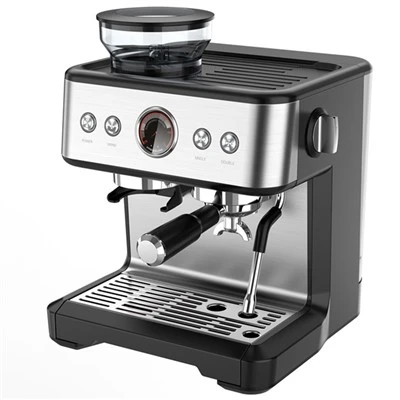
If you’ve ever hung out at a busy café on a Saturday morning, you know that the guy pulling those perfect espresso shots is basically a rockstar. And guess what? His secret weapon isn’t just skill—it’s a commercial espresso machine that’s not just a fancy coffee maker. As someone who’s been supplying these bad boys to cafés, roasters, and even boutique hotels for over a decade, I’ve seen firsthand how a “regular” home machine can’t hold a candle to what these commercial units bring to the table. Let’s break down the real features that make a commercial espresso machine work for high-volume spots, without getting all tech-jargon heavy (I swear I’ll keep this relatable).
First off, let’s talk about boiler systems—this is where the magic (and the frustration) happens. Home espresso machines usually have one tiny boiler that does double duty: heats water for brewing and creates steam for milk. But a commercial machine? Most of ’em use either dual boilers or a heat exchanger system, and that’s a game-changer. Picture this: a café is swamped—three baristas are pulling shots, someone’s yelling for a latte, and the steam wand needs to froth milk for four lattes at once. With dual boilers, one’s heating water at the exact temp you need for espresso (around 195-205°F, by the way—too hot and it burns the coffee, too cold and it’s weak), while the other is cranking out steam for frothing. No more waiting 5 minutes for the boiler to reheat after a shot. The heat exchanger is a middle ground—uses the steam boiler to heat water for brewing, so you can pull shots and steam milk at the same time without killing your shot temp. I’ve had café owners tell me this is the #1 feature they regret not splurging on when they started out.
Next up, group heads. That’s the part of the machine where you lock in your portafilter (the thing with the coffee grounds) to pull a shot. Commercial group heads are built like tanks, plain and simple. They’re usually made of solid brass or stainless steel, which holds heat way more consistently than the plastic or aluminum group heads you find on home machines. Consistency is everything in coffee—one shot needs to taste like the next, even if you’re pulling 50 shots an hour. Some commercial machines also have pre-infusion settings, which sounds fancy but is just a slow trickle of water over the coffee grounds before the full shot pressure hits. This lets the coffee “bloom” (you know, that little fizz when you add water to grounds) without pushing too hard too fast, which brings out all the sweet, nutty notes instead of bitter, sour garbage. I’ve had baristas say pre-infusion cut their shot waste by almost 10%—that’s real money saved when you’re going through 10 pounds of coffee a day.
Then there’s the pressure control. Espresso needs about 9 bars of pressure to turn those grounds into that thick, golden crema we all love. Home machines often have inconsistent pressure—sometimes it’s too low (weak, watery shots) or too high (burnt, bitter). Commercial espresso machines, though, have built-in pressure gauges (not just a little dial, but a clear, easy-to-read one) that let you keep that 9 bars steady. Some even have PID controllers, which I know sounds like NASA tech, but it’s basically a tiny computer that keeps the water temp within 0.5°F of your set point. No more guessing if the boiler’s at the right temp—you set it, and it stays there, even when another barista is pulling a shot next to you. I once had a roaster friend who told me a PID-controlled machine helped them bring out notes of dark chocolate in their medium-roast beans that they never knew were there. Wild, right?
Steam wands—let’s not sleep on these, because a latte is only as good as its microfoam. Commercial steam wands are way thicker, sturdier, and longer than home ones. Some even have a swivel design, so you can angle them exactly where you need them in the milk pitcher, which makes frothing way faster and less messy. The best ones also have a small air hole at the tip that lets in just the right amount of air to create that silky microfoam (not those big, lumpy bubbles you get from a cheap wand). I’ve seen baristas froth a pitcher in 10 seconds flat with a good commercial wand—total time-saver during rush hour. Also, most commercial wands are easy to take apart and clean, which is non-negotiable. Nobody wants old milk gunk clogging up their wand and ruining every latte for the rest of the day.
Volume and durability. Let’s be real—this machine isn’t for making one shot on Sunday morning. A commercial espresso machine is built to handle 500+ shots a day, 6 days a week, for years. The frame is heavy-duty metal, all the parts are replaceable (because when something breaks, you don’t want to have to buy a whole new machine), and they’re tested to hold up to constant use. Home machines just can’t cut that—their parts are too flimsy, and they’ll burn out after a few hundred shots. I had a customer a while back who opened a tiny neighborhood café with a secondhand commercial machine that was 15 years old. He’s since expanded to two locations, and that original machine is still pulling shots every day. That’s the kind of durability you can’t get with a home model.
Wait, also—group count. If you’re a tiny café, a single-group machine works (it’s one group head, so one shot at a time). But if you’re a busy spot with lines out the door, you need two or three group heads. That means two or three baristas can pull shots at the same time, so you don’t have customers waiting 15 minutes for their lattes. I always tell new café owners to size up on group count—better to have extra capacity than to be scrambling during morning rush and losing customers.
Oh, and don’t forget about the extras that matter for work life. Most commercial machines have drip trays that are deep and easy to empty, no more mopping up coffee water every hour. Some have built-in timers, so you can preheat the machine overnight so it’s ready to go at 6 a.m. instead of waiting 30 minutes for it to heat up. A lot of them also have space for a cup warmer on top—perfect for keeping mugs hot so your espresso doesn’t get cold in 2 minutes. Small stuff, but stuff that makes a barista’s day way easier.
Now, I know what some of you are thinking: “That sounds expensive.” And yeah, commercial espresso machines cost more upfront than a home one. But here’s the thing—they last longer, they cut down on wasted coffee (because consistent shots mean fewer bad drinks), they keep customers happy, and they can handle the volume of a real business. I always tell people to look at it as an investment, not a purchase. A bad home machine might die in 3 years; a good commercial one will last a decade or more. That’s way more bang for your buck.
I’ve spent years working with café owners, baristas, and roasters, testing different machines, troubleshooting issues, and figuring out exactly what works for real businesses (not just some tech review site). The biggest mistake I see people make is buying a machine that’s too small, or skimping on the boiler system, and then they’re stuck with a machine that can’t keep up once they get busy. The features I talked about aren’t just fancy add-ons—they’re the things that make your café run smoothly, keep your customers coming back, and make your baristas want to show up to work every day.
If you’re in the market for a commercial espresso machine—whether you’re just starting out, expanding, or replacing an old unit—I’m here to help. I don’t do pushy sales pitches; I ask you about your volume, your menu, your space, and help you pick something that fits exactly what you need, not what’s the most expensive or the fanciest.

If you’re ready to chat through your options, or have questions about features I didn’t cover, hit me up. Let’s talk about what’ll work for your business, no pressure.
Semi Automatic Espresso Machine References:
- Specialty Coffee Association. (2022). Commercial Espresso Machine Performance Standards. SCA Coffee Equipment Guild.
- Penix, D. (2021). The Practical Barista’s Guide to Commercial Espresso Equipment. Coffee Industry Press.
- National Coffee Association. (2023). Commercial Coffee Equipment Durability and ROI Study. NCA Research Division.
Foshan City Moccona Electric Co., Ltd.
With abundant experience, we are one of the leading manufacturers and suppliers of espresso machine in China. We warmly welcome you to buy bulk durable espresso machine from our factory. If you have any enquiry about cooperation, please feel free to email us.
Address: Room 202, Building 16, Tongde Intelligent Manufacturing Park (TDIMP), No.9 Guizhou Avenue East, Shangjia Community, Ronggui Street, Shunde District, Foshan City, Guangdong Province
E-mail: tim@mocconaelectric.com
WebSite: https://www.mocconaelec.com/
